Amphenol T3400 - A Coolant Leak Detector
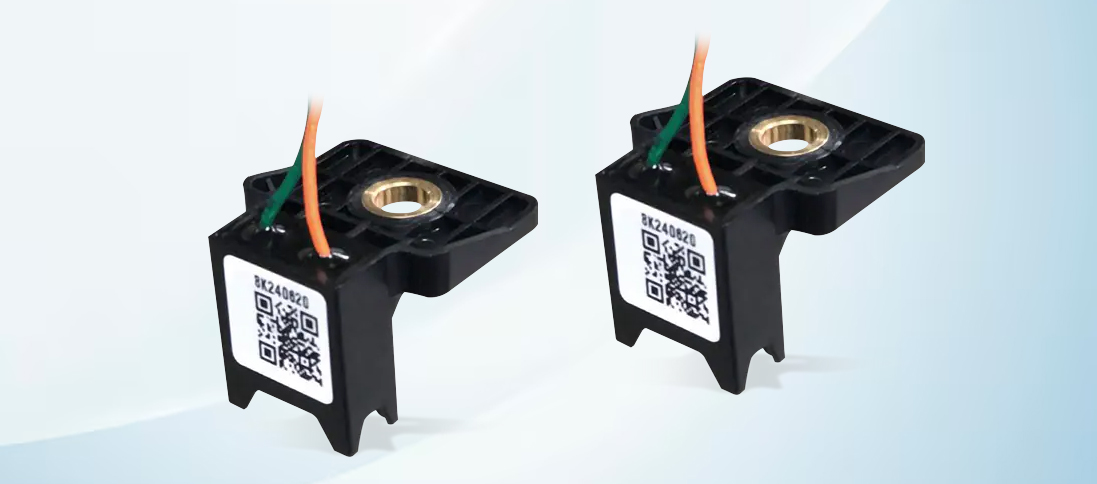
Detecting refrigerant leaks early is beneficial for two reasons: not only is refrigerant highly harmful to the environment, but leaks can lead to significant costs and cause thermal runaways or other undesirable situations. With the T3400, Amphenol provides a sensor intended to prevent just that.
With a mechanical size of 40 x 35 x 11.5 mm and a housing certified to IP54, the T3400 is a highly compact sensor. This is beneficial as it gives the industrial designer additional freedom for component placement
- the sensor can be placed in spaces where a coolant leak is expected or where the expelled coolant will collect in the case of a cooling system leakage.
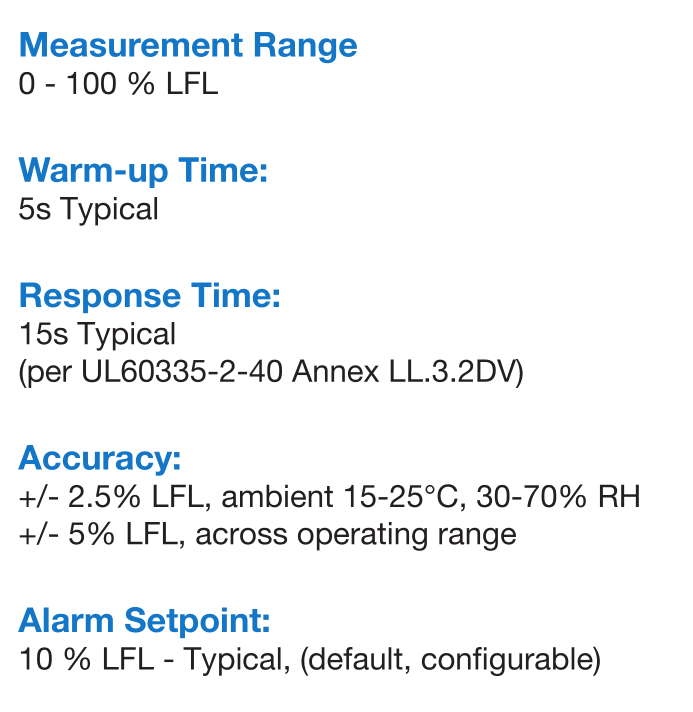
These tiny physical dimensions are achieved by utilizing a second-generation MEMS element that contains a heat transfer cavity, which has been patented multiple times by Amphenol. This removes the mechanical elements typically required in traditional coolant detection. The system also features support sensors that account for thermal and air pressure changes, ensuring that the detection range, as shown in the figure below, remains consistent even when environmental system conditions change.
The all-solid-state construction furthermore enables a 15-year lifetime - the system can be deployed in places that are difficult to access once the machine is at the end customer.
Flexible Communication Simplifies Data Harvesting.
The T3400 comes with a cable approximately 15 cm long, whose pinout is shown in the figure below.
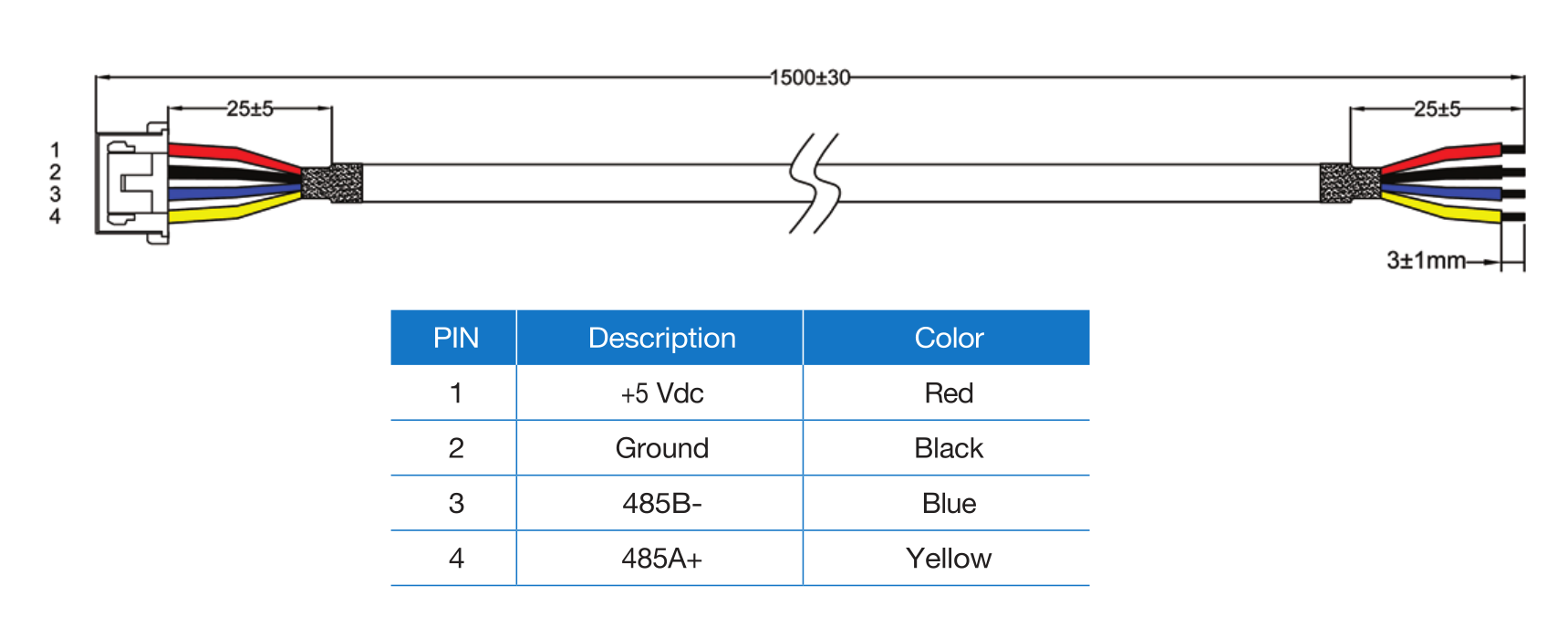
Amphenol implements the Modbus protocol, ensuring the sensor can integrate seamlessly into various industrial automation systems. If an automation system is already interacting with other sensors, integration is done by adding an extra wire harness connector of the type HP2502J-B-4Y.
As for actual detection performance, a warm-up time of but five seconds is needed. After that, the system usually responds within 15 seconds to the start of a coolant leak. Finally, the alarm set point is set to 10% and can be adjusted as needed.
In terms of power consumption, the system is tolerant of a supply voltage ranging from 3.3V to 5.5V DC, with a 5V supply being preferred. The peak operating current is limited to 22 mA.
Finally, the IP54-protected housing enables the sensor to thrive in challenging environments, with an operating temperature range of -40°C to 60 °C and an operating pressure range of 70 to 120 kPa. Finally, the system is certified by various standards - this can be useful for situations where the entire industrial system needs to undergo its certification.
SKUs Select Gas Sensitivity.
Amphenol's data sheet states that the part can be customized to all commonly used refrigerant gases. As of this writing, two SKUs are offered. The Amphenol T3400 is sensitive to R32, while Amphenol T3401 is tuned to detect R454B.
Conclusion.
Detecting refrigerant leaks early is the way to increase system reliability. Thanks to the T3400, leaks of commercially used coolants can be detected without additional effort---a significant investment in reliability and environmental friendliness in all areas where cooling agents are used to limit temperature.