ams OSRAM TCS3448 - A Flexible Colour Sensor for Ambient Light Assessment
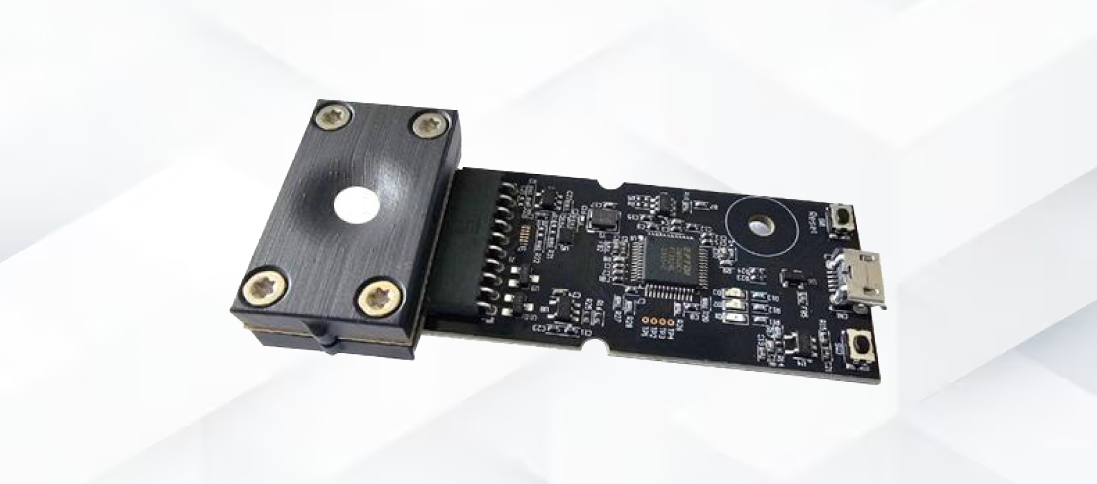
Determining the spectral composition of ambient light is helpful in a variety of applications; for example, camera sensors can be calibrated effectively if the colors present in the ambient light are known. With the TCS3448, ams OSRAM launched a sensor intended for this purpose.
From a technical point of view, the sensor's design is perfect. An I2C interface is connected to the actual sensor array, thereby enabling the comfortable harvesting of data to a microcontroller of choice. The MCU can modify the behavior of the various ADCs in the sensor to implement custom attenuation profiles. If needed, the conversion time can be managed via a dedicated on-chip timer module.
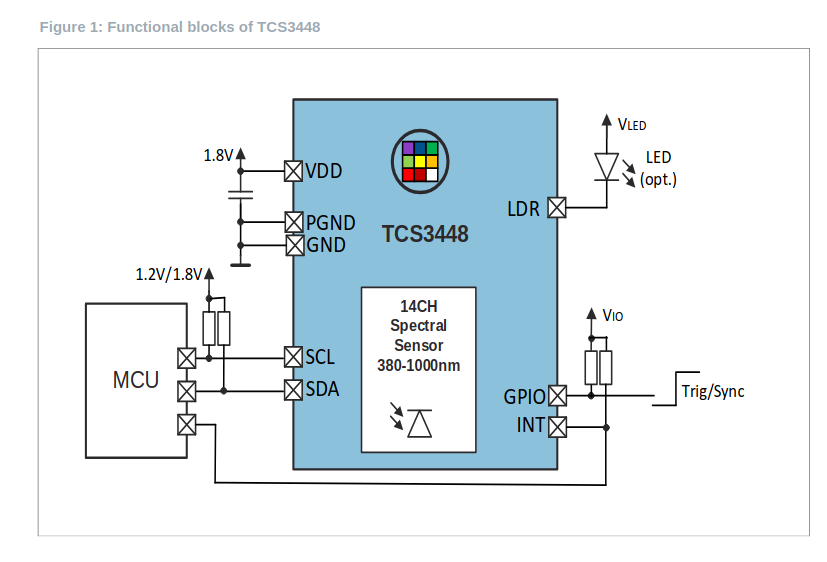
In terms of power, the sensor operates on a 1.8V supply voltage and can function with both 1.2V and 1.8V I2C buses. An interrupt function aims to eliminate polling, thereby reducing the amount of bus traffic.
Color Filters for Light Segmentation
Actual color sensing is accomplished via a 5x5 array of photodiodes. The arrangement of the filters placed above them can be derived from the following image.
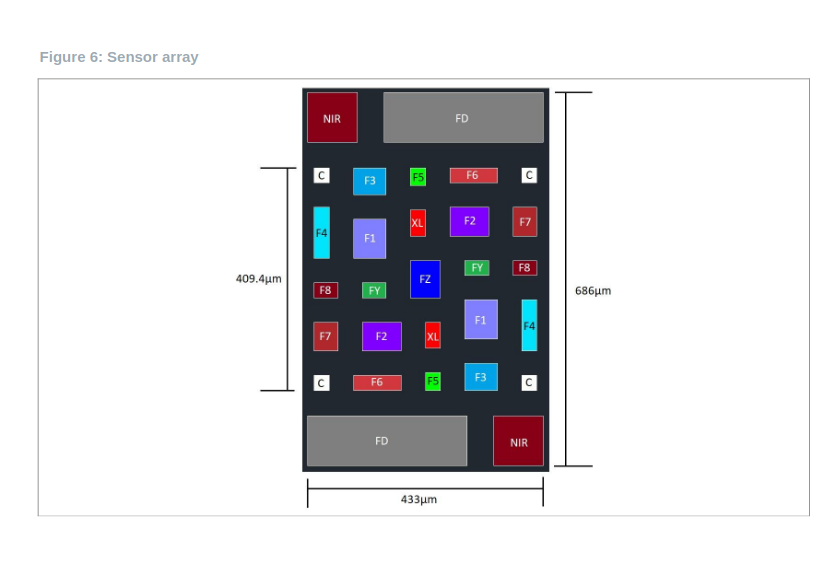
One fascinating aspect of the ams OSRAM sensor is that not all of the diodes are dedicated to the eleven different color channels. In addition to a near-infrared and a clear channel, the sensor also contains a flicker detector. It can be used to detect flicker at any frequency -- 50 and 60Hz mains flicker are detected automatically by the chip.
Colour Sensing Is Made Easy With a Starter Kit.
Individual sensors can be procured via their SKU TCS34488. They can be placed on an application PCB of choice, resulting in a functioning system. The question of TCS34488 vs TCS34488M is purely related to PCB assembly: the two SKUs are packaged in different formats, with the width of the tape reel differing between the options.
If no soldering is possible, the TCS3448_EVM_KT evaluation board provides an alternative approach to kick-starting the design of a solution based on this color sensor. Its structure is shown in the figure below.
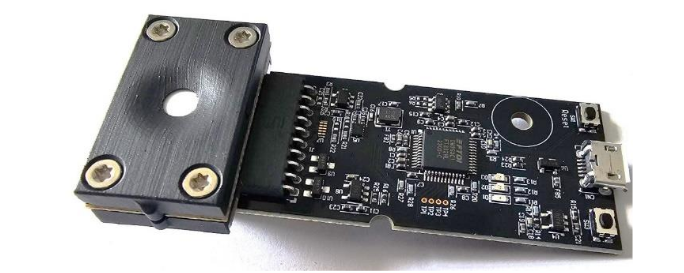
Thanks to the inclusion of an FTDI dongle, a PC can directly interact with the color sensor. Furthermore, the sensor board and its optical assembly can be disconnected easily -- the standard 2.54mm connector can then be used to "rehome" the sensor to a prototype of the application PCB.
Conclusion
If a system requires precise information about ambient light colors and spectral composition, the TCS3448 system is an easy-to-deploy sensor that provides highly valuable information. Thanks to the standardized communications interface, microcontroller integration is easy -- in short, a highly recommended product.