BBC micro:bit SINGLE V2.21 - A Computer Dedicated To Teaching STEM

Lowering the barrier of entry is a great way to make STEM teaching more interesting. With the BBC micro:bit, educators are provided with a comfortable-to-use yet powerful process computer that can be used to teach a wide array of sciences, from programming to industrial automation.
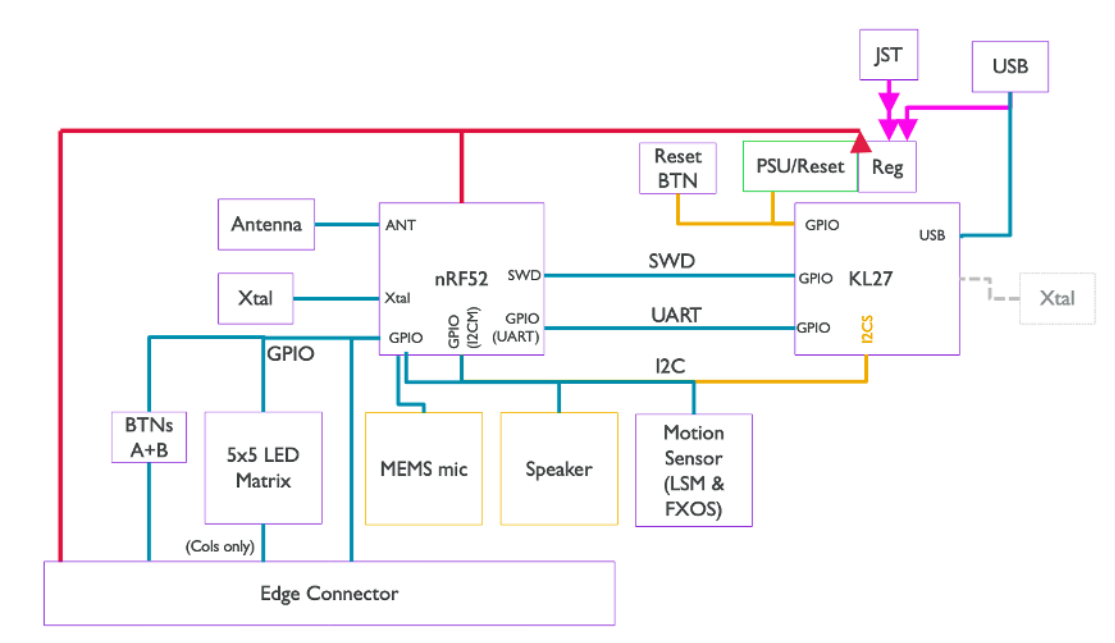
The BBC micro:bit uses the very popular Nordic Semiconductor nRF52833 processor. Its architecture is shown below. Interestingly, an on-PCB antenna is provided to enable direct experimentation with the SoC's Bluetooth transmitter.
## Memory for algorithmic experiments
The SoC has 512 kB of flash ROM, 128 kB of RAM, and a top speed of 64 MHz. This means that the environment is forgiving if low-efficiency algorithms are created by programming beginners. Experienced developers can manage drones and similar objects via the BBC micro:bit.
Bluetooth and Other Wireless Systems
The Nordic Semiconductors nRF product family includes a highly flexible 2.4 GHz transceiver. While it is fully Bluetooth-certified, the system can also run a variety of proprietary and open wireless communication protocols.
One particularly fascinating aspect is the BBC micro:bit radio. It is a broadcast radio system - fully documented at https://lancaster-university.github.io/microbit-docs/ubit/radio/. A basic network structure is shown in the figure below.
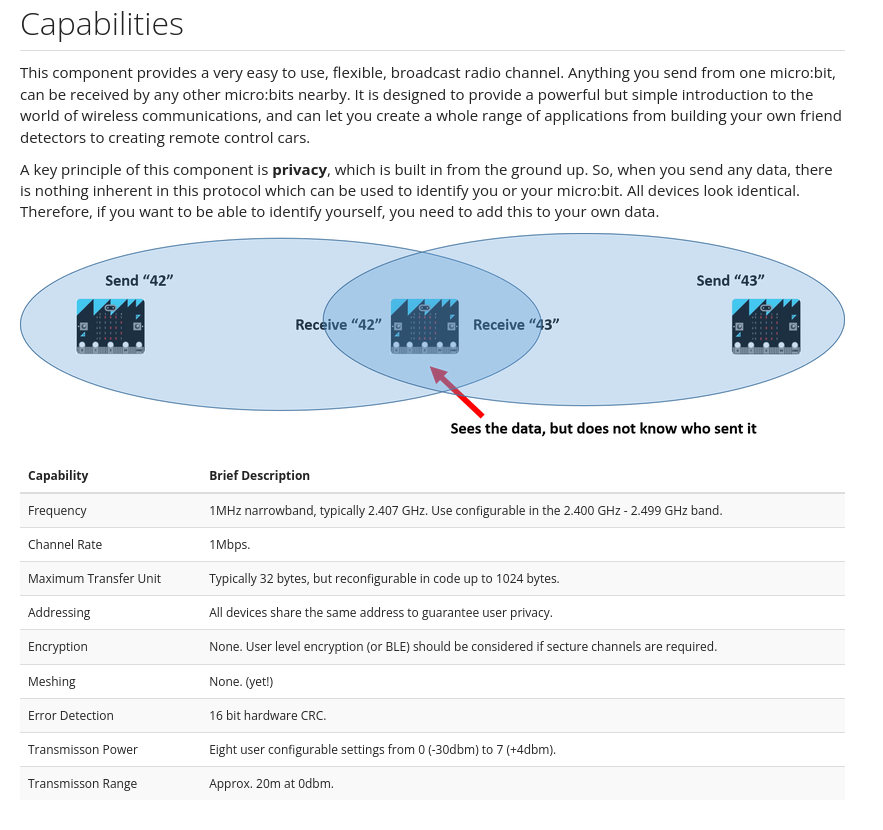
The nRF52833 can also be used as a Bluetooth microcontroller. This way, STEM educators can expand the class to include the creation of companion applications running various mobile phone operating systems.
Buttons, a Speaker, and a Microphone
On-PCB input and output periphery means that example programs can interact with the environment. The input and output complements are shown as follows.
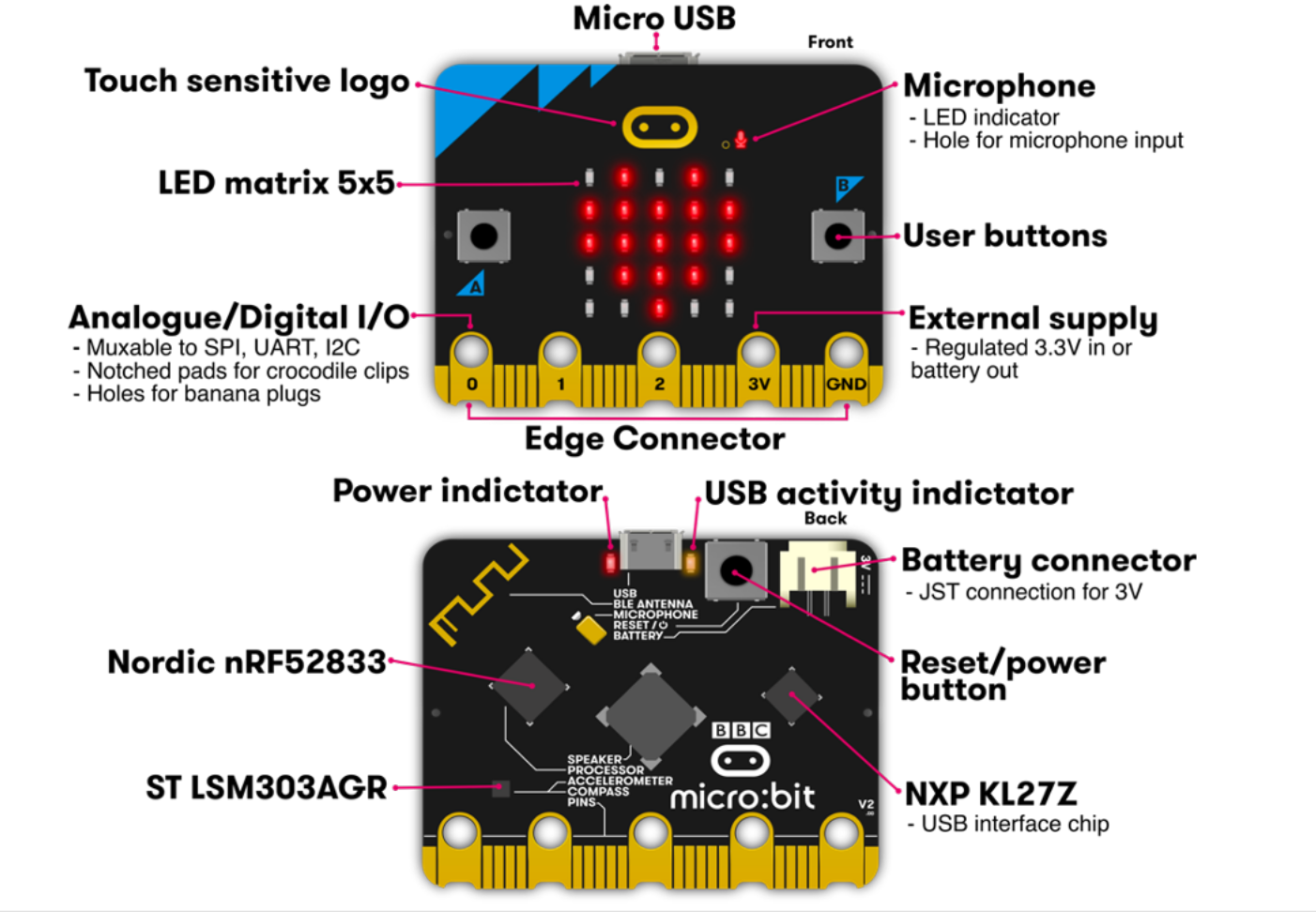
The edge connector at the bottom exposes GPIO pins. External hardware can be connected easily; in addition, the generous pin spacing allows for ad hoc manual soldering.
On the front of the board, two user buttons and an LCD matrix aid input and output. A microphone and a speaker expand the product's reach into the audio domain.
At the back, an STMicroelectronics LSM303AGR accelerometer and compass can be used as a data source. Finally, the integrated MicroUSB socket deserves mention. The firmware can be used to connect directly to the PC, thereby simplifying the deployment of example programs.
Wide Software Support Available
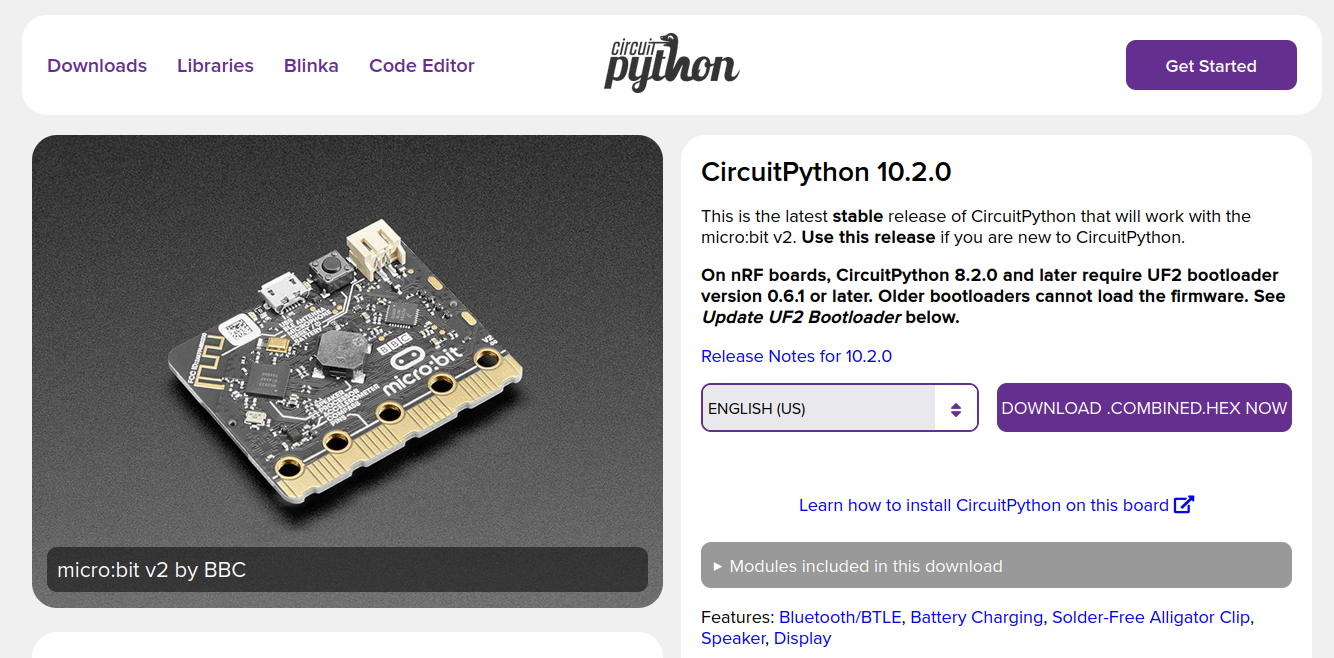
Designers and educators deploying the micro:bit can look forward to simple integration into a wide variety of software ecosystems. For example, Adafruit CircuitPython fully supports the product. Visit https://circuitpython.org/board/microbit_v2/ to reveal the screenshot shown.
Educators seeking to get started on class-level materials can find a variety of literature. Finally, the market provides upgrade options such as the Adafruit CLUE (aka 4500) - it uses a stronger version of the SoC, and can be beneficial if very large examples need to run.
Conclusion
Using a comfortable-to-handle platform for basic training is helpful, as it reduces the barrier to entry. With the BBC micro:bit SINGLE V2.21, STEM educators receive an excellent microcontroller board.