Importance of Li-Ion Batteries in Energy Systems
Overview: This article reviews the role of lithium-ion battery energy storage systems in modern power grids. It covers battery fundamentals, modeling, and management systems, highlighting their economic benefits.
Renewable energy supplies are essential to prevent greenhouse gas emissions from traditional fossil fuel energy sources. Energy storage must incorporate these renewable energy sources into the power grid. Pumped-hydro, compressed air, and battery energy storage systems (BESS) are the three primary storage technologies more widely used in power systems than other storage types.
What is the importance of Li-Ion batteries in energy storage systems?
Battery energy storage systems offer significant deployment flexibility compared to traditional large-scale energy storage technologies like pumped-hydro and compressed air technology, which have site constraints requiring specific geographical features. Furthermore, BESS provides rapid response, a low self-discharge rate, high efficiency, and energy density.
Among various kinds of battery technologies, lithium-ion batteries have many advantages, including higher energy density, rapid charging, and reliability. Ongoing research focuses on improving their safety, durability, and sustainability through advanced battery management systems.
Composition
Lithium-ion batteries are complex energy storage devices composed of several key materials and components, as shown in Fig. 1. Electrochemical cells coupled in parallel or series make up a battery, which is comprised of
- Cathode (Positive electrode)
- Anode (Negative electrode)
- Electrolyte
- Separator
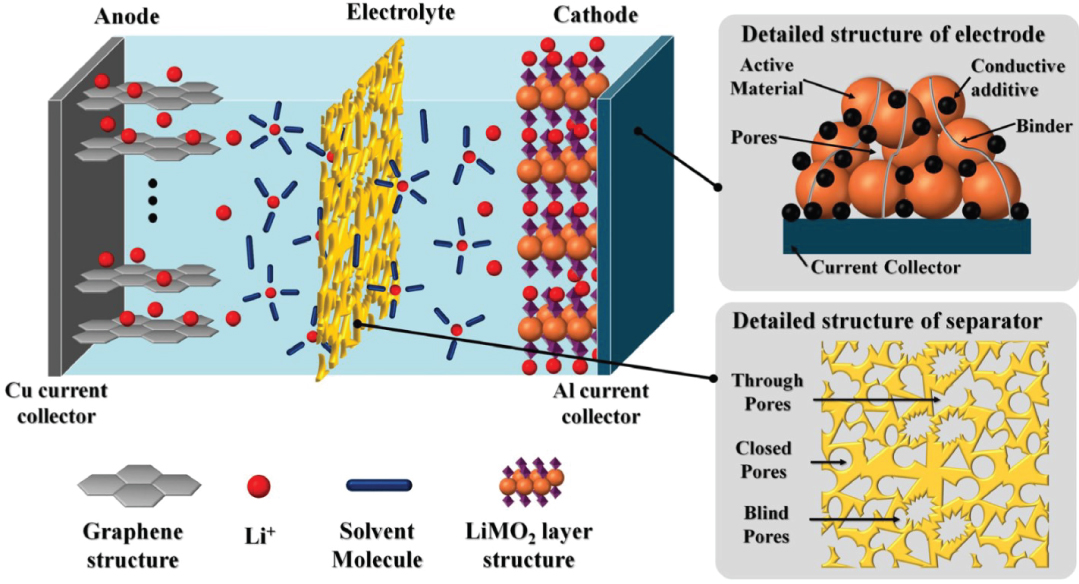
Fig 1 Composition of lithium-ion battery Source: MDPI
The most commonly used cathode include
- Lithium cobalt oxide (LiCoO2)
- Lithium manganese oxide (Li-Mn-O)
- Lithium iron phosphate (LiFePO)
- Nickel Manganese Cobalt Oxide (NMC)
The most commonly used anode include
- Carbon (graphite)
- Lithium titanium oxide
- Lithium aluminum
- Silicon
The liquid organic solvent that makes up the electrolyte layer contains lithium salts, usually LiPF₆, which enable the movement of lithium ions between electrodes.
A microporous layer that prevents direct contact between the anode and cathode while allowing lithium ions to pass through makes up the separator. The electrolyte and separator mainly contribute to the safety, whereas the anode and cathode materials control a battery's fundamental performance.
Key Characteristics
Energy density: Lithium-ion batteries offer exceptional energy storage capabilities, with energy densities ranging from 150-250 Wh/kg. This allows them to store substantial energy while maintaining a lightweight and compact design.
Internal resistance: Internal resistance is a measure of the battery's resistance to current flow, typically expressed in milliohms (mΩ). The internal resistance ranges from a few mΩ to a few hundred mΩ, which is influenced by electrode material, thickness, temperature, state of charge, battery age, etc.
Cycle life: These batteries have impressive longevity, typically providing 500-7,000 discharge cycles with a potential lifespan of up to 15 years. It is dependent on various factors, including depth of discharge, temperature, and charge rates.
Charging rate: Their good power density provides fast charging capability. C-rate is the measure of charging speed, where 1C indicates full battery charge in one hour. The charging rate of lithium-ion batteries typically ranges from 0.5C to 3C.
Voltage characteristics: Their nominal cell voltage is about 3.6-3.7 volts, and the operating voltage ranges up to 4.2 V. This higher voltage contributes to more efficient energy conversion and reduced cell requirements
Thermal runaway: Thermal runaway in lithium-ion batteries is a catastrophic failure mode characterized by a self-accelerating, uncontrollable increase in cell temperature. The temperature range of various lithium-ion batteries with different cathode materials is shown in Table. 1.
Self-discharge Rate: It has a relatively low self-discharge rate (2-3% per month) and has a better shelf life than many other rechargeable batteries.
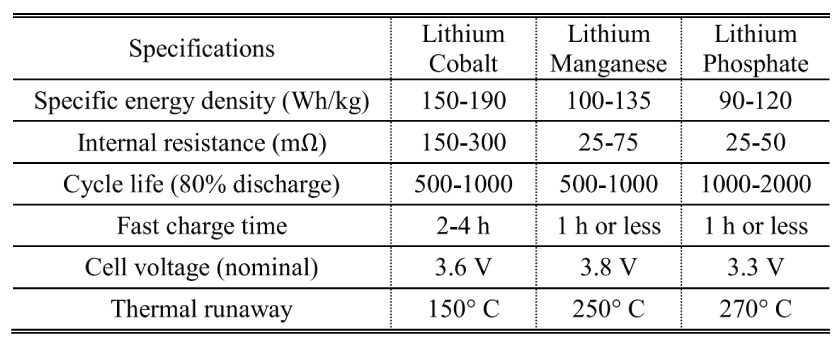
Table 1 Key characteristics of lithium-ion battery with different cathode material Source: IEEE Transactions on Smart Grid
Modeling of Li-Ion Battery Systems
Grid-connected lithium-ion BESSs must be designed, implemented, and managed using accurate battery models. The three common types of battery models found are
- Electrochemical
- Empirical
- Equivalent-circuit
Electrochemical
They provide high-accuracy information on the dynamics of batteries during charging and discharging. The high nonlinearity, high coupling, and numerous parameters of these models result in a high computational burden, making them unsuitable for online implementations.
Empirical
Empirical models primarily determine the input and output of the battery energy state. They are a low-complex model and have linear functions. It facilitates easy implementation and contributes to the widest range of applications in grid-connected energy storage. However, they exhibit the lowest level of accuracy as a result of their inability to provide the internal battery dynamics.
Equivalent-circuit
Equivalent-circuit models illustrate the behavior of the battery. They have the ability to maintain balance model accuracy and complexity. The moderate number of parameters enables easy implementation and analysis. They are commonly employed in the estimation of battery state, grid-connected energy storage, etc.
Importance of Battery Management System
The key goals of a battery management system (BMS) are to maintain safe functioning and extend its usable life. The expansion of grid-connected BESSs would be greatly accelerated by properly maintaining such a BMS. Many embedded sensors, actuators, controllers, and signal lines comprise a BMS. BMS is necessary for maintaining various parameters, as shown in Fig. 2, which include
- SOC estimation
- SOH estimation
- Thermal management
- Cell balancing, monitoring, and control
- Charging and discharging mechanism
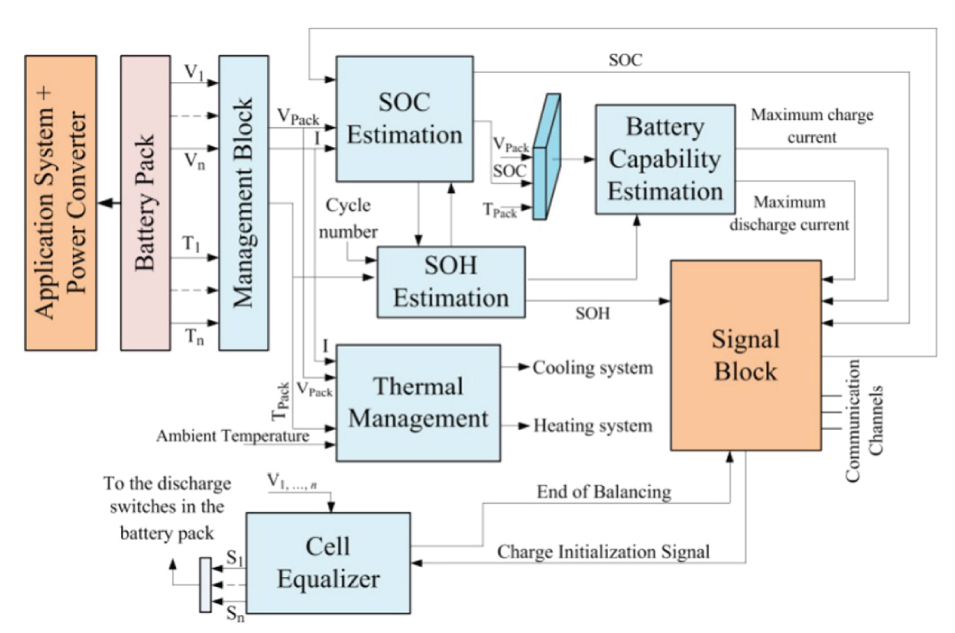
Fig 2 Various key features of battery management system Source: IEEE Transactions on Smart Grid
Challenges in Implementation and Management
Despite the remarkable growth in BESS deployment worldwide, significant challenges remain in achieving sustainable development in power systems. The relationship between BESS characterization, modeling, management, and grid applications presents an ongoing challenge that requires continuous analysis and updates. This complexity is particularly evident in three areas:
- Battery management systems
- Reliability analysis
- Energy management strategies
Battery management poses technical challenges in monitoring and controlling cell performance, thermal behavior, and state estimation. Reliability analysis must address the battery systems and their integration with the power grid, ensuring consistent and dependable operation. Energy management strategies need to optimize BESS operation while considering multiple objectives such as grid stability, economic dispatch, and system longevity.
Summarizing the Key Points
- Lithium-ion batteries are important for energy storage systems in modern power grids, offering high energy density, rapid charging, and reliability, making them superior to traditional storage technologies.
- Battery energy storage systems provide flexibility and efficiency, enabling the integration of renewable energy sources while minimizing greenhouse gas emissions from fossil fuels.
- Effective battery management systems are essential for monitoring performance, ensuring safety, optimizing the operation of BESS, and addressing challenges in reliability and energy management.
Reference
Rouholamini, M., Wang, C., Nehrir, H., Hu, X., Hu, Z., Aki, H., Zhao, B., Miao, Z., & Strunz, K. (2022). A Review of Modeling, Management, and Applications of Grid-Connected Li-Ion Battery Storage Systems. IEEE Transactions on Smart Grid, 13(6), 4505–4524.
https://doi.org/10.1109/tsg.2022.3188598
Massaoudi, M., Abu-Rub, H., & Ghrayeb, A. (2024). Advancing Lithium-Ion Battery Health Prognostics With Deep Learning: A Review and Case Study. IEEE Open Journal of Industry Applications, 5, 43–62. https://doi.org/10.1109/ojia.2024.3354899
Ghani, F., An, K., & Lee, D. (2024). A Review on Design Parameters for the Full-Cell Lithium-Ion Batteries. Batteries, 10(10), 340.
https://doi.org/10.3390/batteries10100340