MPS MCS1826 - A Low Loss Hall Effect Current Sensor
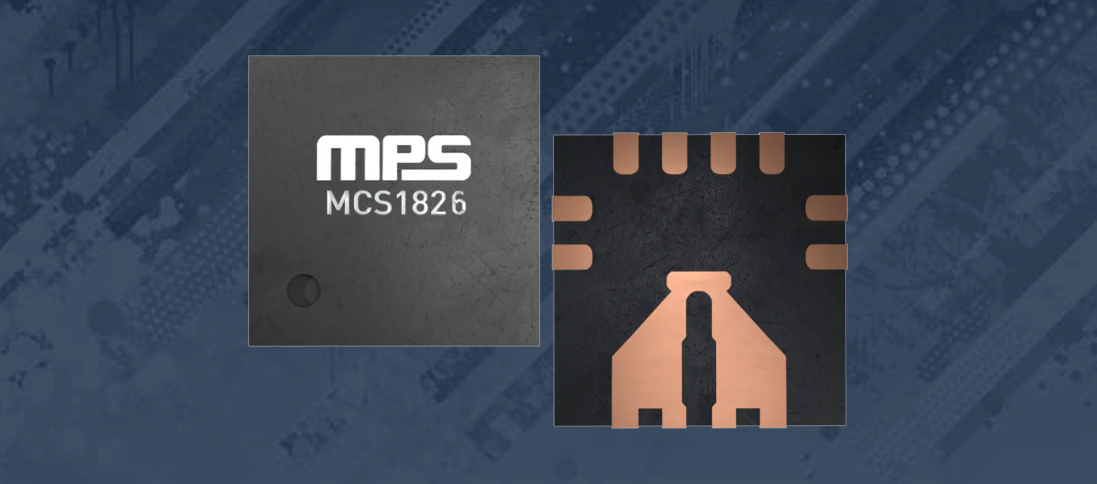
Current sensor resistance is undesirable, as it leads to self-heating and energy loss. With the MCS1826, Monolithic Power Systems provide a minuscule sensing resistance of but 0.6mΩ and a maximum current of ±50 Amperes.
Constructing current measurement circuits from discrete components is a notoriously interesting project if high-side current measurements must be performed. Offset cancelation requires a nice bit of analog trickery. Deploying a current sensor IC is a neat and quick way to work around the problem.
Hall Effect Current Sensing
The MCS1826 is, at its heart, a magnetic sensor. Current flows into the device, causing a magnetic field. Its intensity is then measured to obtain more information about the situation -- in principle, the inner workings of the component are as follows.
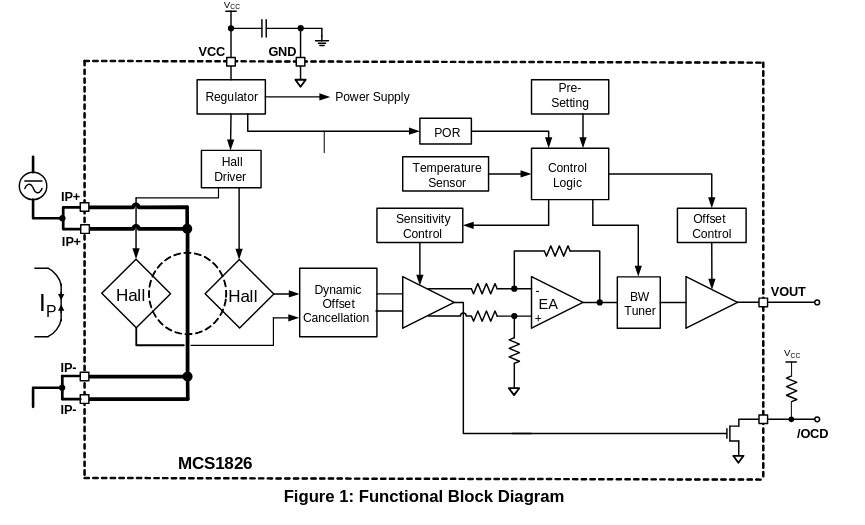
An application circuit reveals the simplicity of current measurements using this MPS sensor. The current to be measured flows through the device via its input and output pins; an analog value corresponding to the current's strength is output for an ADC or analog limiting logic. Thanks to the use of two measuring loops, the sensor can out-calibrate ambient magnetic fields.
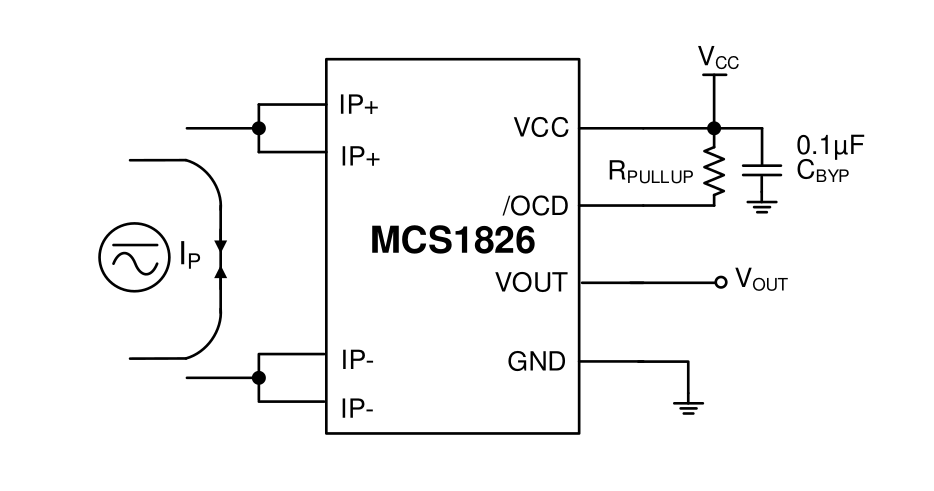
MPS provides an overcurrent output. It activates whenever the current flowing through the part exceeds the design limit and can be used to trip solid-state fuses and similar components.
As for power, the sensor's internal supply and correction logic must be fed via the Vcc and GND pins. MPS enables single-supply operation with a voltage range of 3V to 5.5V, thereby reducing the demands on the power train of the application circuit.
Multiple SKUs for Current Limit and Current Range Selection
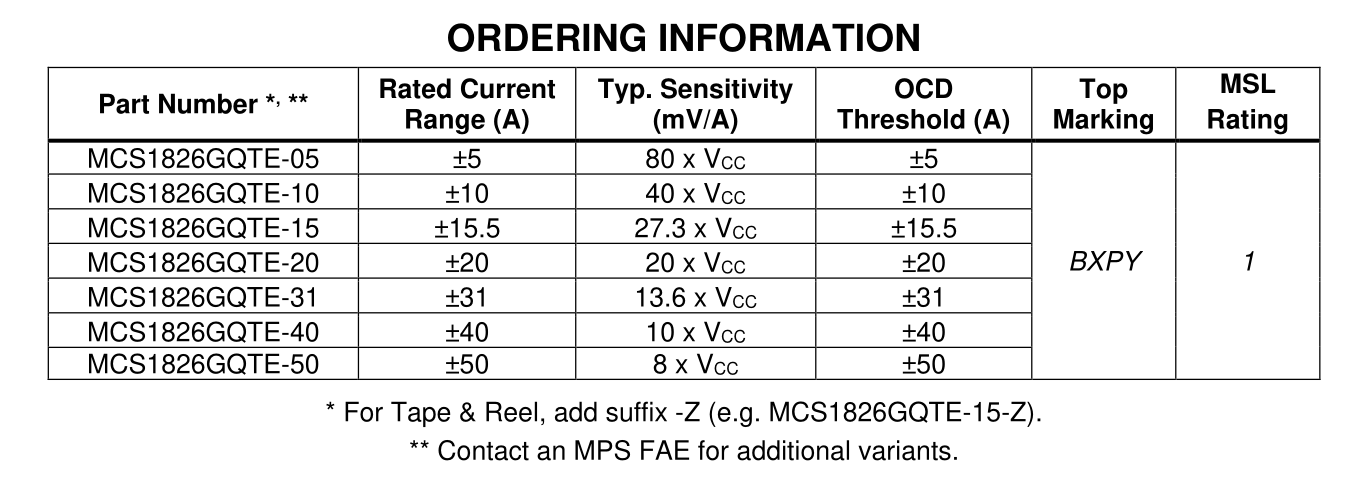
MPS sells the MCS1826 family in a factory-calibrated state. Designers can select from a variety of SKUs to find the current settings that are ideal for their application. For example, the MCS1826GQTE-05 is designed to monitor currents of up to 5 Amperes. The MCS1826GQTE-31 handles 31 A, while the MCS1826GQTE-50 is the top-of-the-shelf model capable of handling up to 50 Amperes of load current. The table below provides an overview of all available versions.
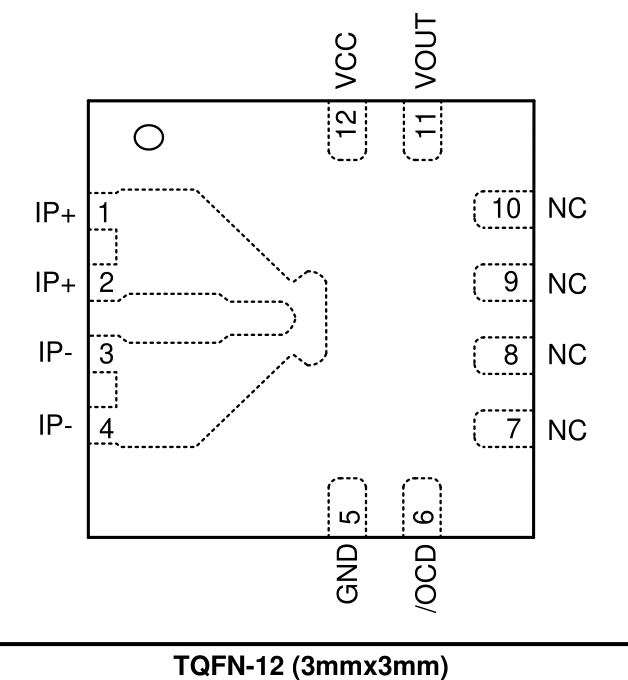
All versions of the part share the PCB footprint shown in the figure below. Current ingress and egress are handled via specially enlarged pins, which can also act as heat sinks. As a result, self-heating effects are minimized.
Conclusion
Should an embedded system benefit from accurate and nearly lossless current measurements, deploying the MPS1826 is a straightforward way to fulfill the task. Thanks to its advanced internal circuitry, stray effects are automatically calibrated out of the system -- in short, a very versatile component.