Passive Infrared Sensors: Applications, Advantages, and Challenges

Overview: This article explores passive infrared sensors, highlighting their significance and IoT applications. It covers operating principles, key components, various types, advantages, and challenges in motion detection.
Smart environments represent a significant advancement in IoT implementation, particularly for indoor spaces where traditional GPS-based systems may not function effectively. There are three primary localization strategies, each offering distinct advantages and capabilities for smart system applications. These smart system localization strategies include wearable devices, camera-based systems, and ultrasonic sensors, which provide a wide range of applications.
However, these smart localization methods also come with a few challenges. Firstly, wearable devices require user compliance, battery maintenance, and accuracy-related issues, etc. A camera-based system that provides detailed movement tracking has privacy concerns. It also has high computational requirements and light-dependent performance.
Ultrasonic sensor-based systems have excellent sensing accuracy but face challenges regarding limited detection fields, multiple sensors needed for coverage, and potential interference issues. One of the most widely used sensors for indoor localization with added advantages is passive infrared (PIR) sensors.
What is a passive infrared sensor?
A passive infrared sensor is an electronic device that measures infrared radiation emitted by objects within its field of view. The term "passive" indicates that the sensor does not emit any energy for detection purposes; rather, it works by responding to the infrared radiation naturally emitted by objects in its environment. The HC-SR501 sensor, as shown in Fig. 1, is a PIR sensor frequently used in motion-sensitive devices such as security systems and controlled lighting.
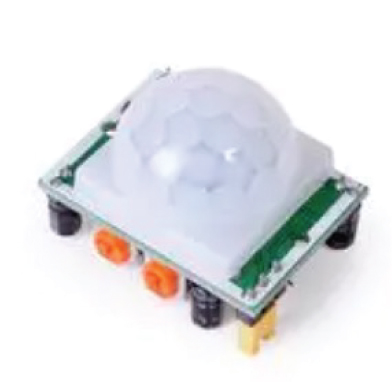
Fig. 1 HC-SR501 PIR motion sensor. Source: oemsecrets
Operating Principle
A PIR sensor is a motion detector whose basic function is to immediately interpret temperature changes caused by target (human or animal) movements inside its field of view, as shown in Fig. 2. When an animal or human body (which typically emits infrared radiation at a wavelength of around 9.4 micrometers) is within the range of the PIR sensor; the sensor will detect its motion via thermal change. The change in infrared radiation creates a variation in electrical charge, which is then amplified and processed to generate a detection signal.
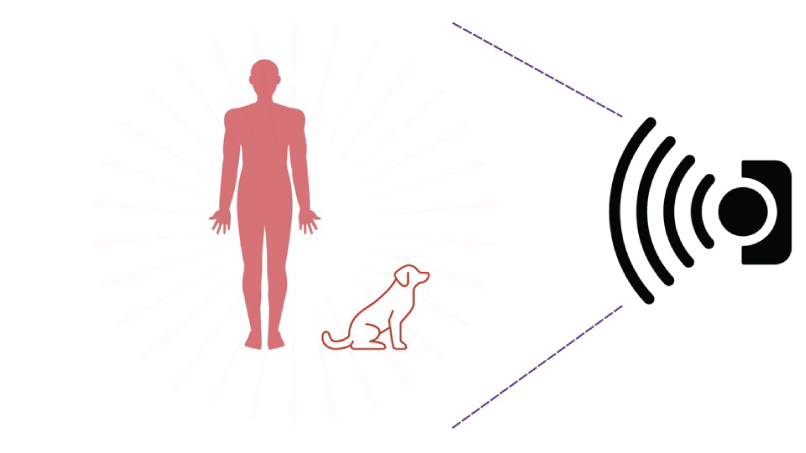
Fig. 2 Diagrammatic illustration of the working of PIR sensor Source: Rakesh Kumar, Ph.D.
Key Components of PIR Sensor
The key components of the PIR sensor are
- Pyroelectric element
- Fresnel lens
Pyroelectric element
Pyroelectric materials are an important sensing element in PIR sensors, as shown in Fig. 3. They are similar to piezoelectric materials but respond to temperature rather than pressure. The basic principle of this element involves the generation of voltage in response to temperature changes. Voltage generation is temporary, occurring only during temperature transitions, and it returns to a neutral state at stable ambient temperature.
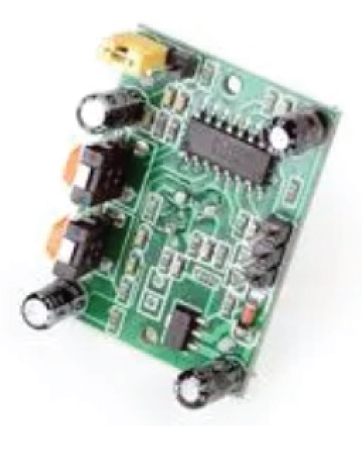
Fig. 3 Sensing element of PIR sensor. Source: oemsecrets
Fresnel lens
With the addition of a fresnel lens, the PIR sensor's detecting range can be greatly increased without making the device much bigger. The base of the fresnel lens comprises several concentric prisms that are etched into it, as shown in Fig. 4. This makes it smaller and lighter than regular plano-convex lenses. These lenses have reduced material absorption losses and made installation easier.
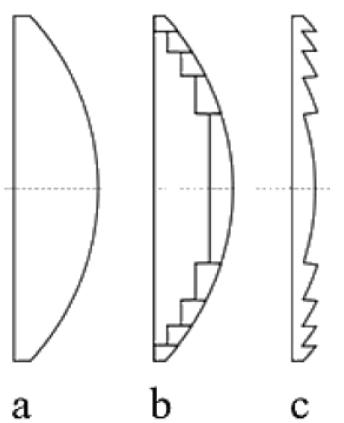
Fig. 4 Diagrammatic illustration of a) Plano-convex lens; b) curved-fresnel lens; c) planar-fresnel lens. Source: MDPI
One of the advantages is that the Fresnel lens focuses infrared radiation from a wider area onto the sensor element. This feature can extend the detection range significantly (up to 20 m indoors and 150 m outdoors, depending on the lens design).
Type of PIR sensor
Based on the number of pyroelectric materials employed, the PIR sensor can be classified as
- Single element
- Dual element
- Quad element
Single Element
It contains one pyroelectric element. They are commonly employed for detecting flames, gas concentration, and overheating. They are suitable for basic detection applications and are unreliable due to potential signal fluctuations.
Dual Element
This type of PIR sensor utilizes dual pyroelectric elements designed to enhance motion detection capabilities. These elements are placed on the same plane and are positioned systematically along the sensor's axis. They detect motion along a single plane (e.g., left-to-right movement) and are suitable for basic security systems, lighting control, home appliance control, etc. They are less prone to error signals caused due to ambient temperature changes, vibrations, external optical noise.
Dual-element PIR sensors to consider:
D203B
The D203B is a dual-element pyroelectric infrared sensor manufactured by Senba Sensing Technology with advanced thermal detection capabilities. It comes in a compact TO-5 metal package with an operating temperature between -30 °C to +70 °C and operates within the 5-14 µm infrared spectrum. The sensor finds applications in security systems, smart home automation, burglar alarms, occupancy sensing, and industrial monitoring.
RE200B
The RE200B is a passive infrared sensor designed for motion detection applications to interpret radiation in a wavelength band of about 10 microns. It has two active elements and operates within a 7-14 µm wavelength range, and it features high sensitivity and a wide field of view. It can function between -20 °C to +70 °C; the sensor detects infrared radiation changes using two balanced elements. It finds applications in security systems, automatic switches, consumer electronics, and human body detection.
Quad Element
These sensors possess four pyroelectric elements, which enable detection in multiple planes (vertical and horizontal). It features advanced applications that can detect motion from top to bottom and from left to right. Typically ceiling-mounted and detects even tiny human movements used in high-end security applications.
A quad-element PIR sensor to consider: ZSBG446671
The ZSBG446671 is a quad-element pyroelectric infrared sensor developed by Zilog. Its quad-element configuration allows for advanced signal processing, effectively eliminating background temperature variations and minimizing false alarm potential across a wide operating temperature range of -30 °C to +70 °C. The operating voltage is from 3 V to 10 V.
The field of view is 132 degrees from the center on the X-axis and 146 degrees from the center on the Y-axis, with an 8-13 μm wavelength range. Primarily deployed in ceiling-mounted security motion detectors, occupancy sensors, and overhead light fixture applications.
Applications
PIR sensors are widely used in:
- Home security systems
- Automatic lighting
- Smart home automation
- Motion-activated cameras
- Public toilet management
- Elevator control
- Pet monitoring systems
Advantages
- They are cost-effective devices with a broad detection range in indoor and outdoor applications.
- They have extremely low power consumption (0.8 W to 1.0 W), making them highly energy-saving.
- These devices remain unaffected by light and work in light and dark conditions.
- It is a less complex smart system method with no privacy concerns.
- The sensor probe does not emit any type of radiation.
Challenges
- It is less effective in high-temperature environments.
- They have limited sensitivity to slow movements.
- They are restricted to line-of-sight detection.
PIR sensors are an important technology in modern automation, providing intelligent motion detection across numerous industries and applications.
Summarizing the Key Points
- Passive infrared sensors detect infrared radiation emitted by objects, making them essential for motion detection in various applications, including security and smart home systems.
- PIR sensors are classified into single, dual, and quad-element types, each offering different detection capabilities and applications, from basic to advanced motion detection.
- Advantages of PIR sensors include low power consumption, broad detection range, and effectiveness in both indoor and outdoor environments, making them cost-effective solutions
Reference
Chen, X., Wen, C., & Sethares, W. A. (2022). Multi-Target PIR Indoor Localization and Tracking System with Artificial Intelligence. Sensors, 22(23), 9450.
https://doi.org/10.3390/s22239450
Wu, C., Chen, X., Wen, C., & Sethares, W. A. (2021). Cooperative Networked PIR Detection System for Indoor Human Localization. Sensors, 21(18), 6180.
https://doi.org/10.3390/s21186180
Tian, P., Han, Y., Li, W., Yang, X., Wang, M., & Yu, J. (2024). New Design Scheme for and Application of Fresnel Lens for Broadband Photonics Terahertz Communication. Sensors, 24(23), 7592. https://doi.org/10.3390/s24237592
D203B - Datasheet
RE200B - Datasheet
ZSBG446671 - Datasheet