PG164110 AKA MPLAB PICKit Basic – A Relaunch Of A Classic
Microchip's PICKit family of programming devices established a cult following across the industry. With the PICKit Basic, Microchip introduces a price-reduced version to give developers the best features of the family.
The ICD5 and PicKit 5 impressed the embedded systems community with a wide variety of advanced features, including Bluetooth connectivity---the video found at https://www.youtube.com/watch?v=yrM78fs-AR8 provides an overview. In practice, developers getting started often do not need this full feature set and prefer a lower price. Should this be the case for the task at hand, the new PICKit Basic is the best choice.
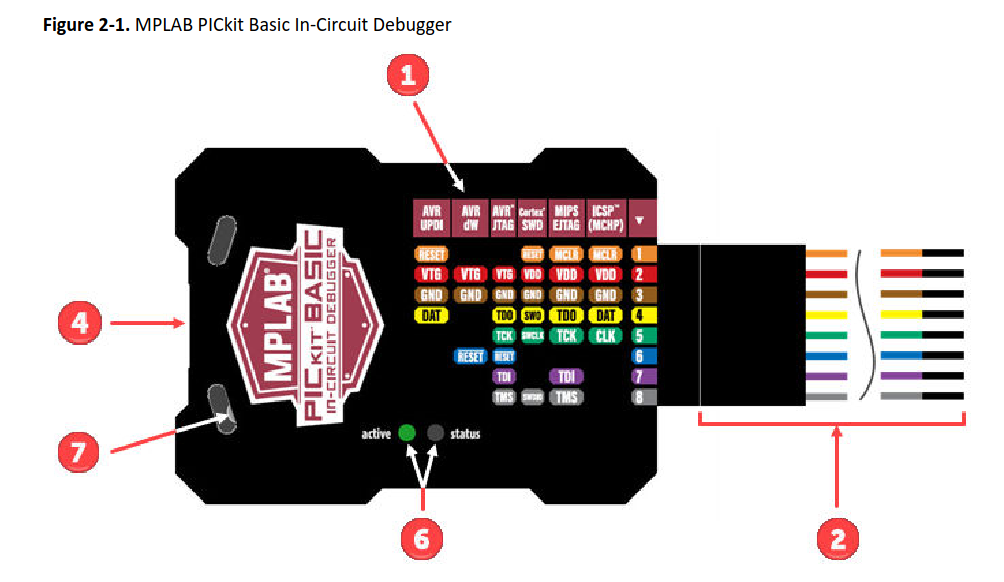
Comfortable With Various Architectures
Microchip expanded its microcontroller portfolio beyond the classic PIC and PIC32 lines. Microchip now also provides a wide variety of MPUs, ARM microcontrollers, and even FPGAs, including RISC/V IP.
As shown in the figure below, Microchip uses an ATSAME70 microcontroller for the MPLAB PICKit Basic.
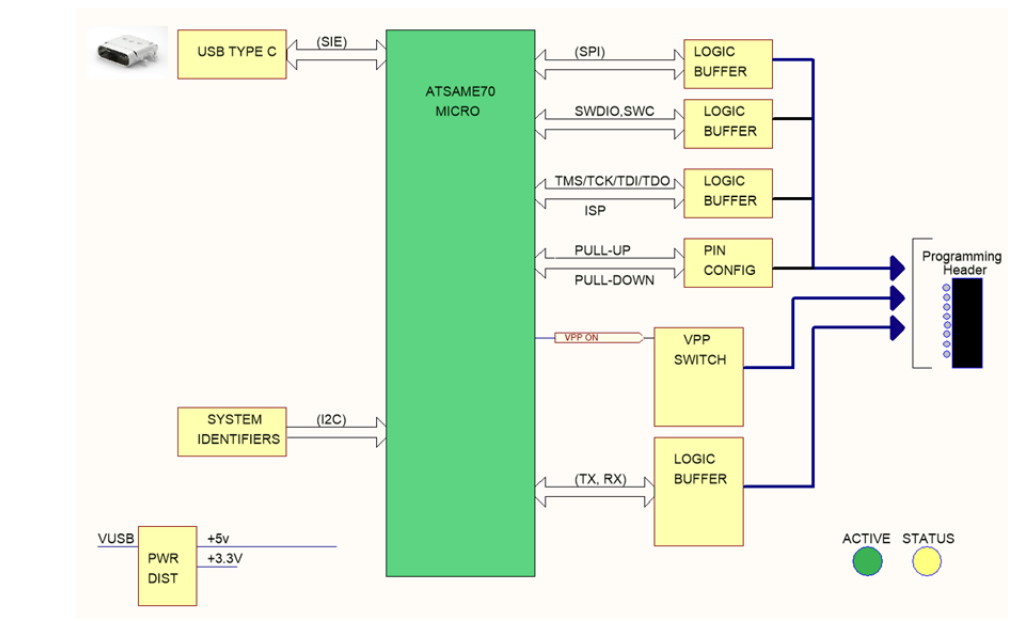
Implementing programming logic via a microcontroller adds significant flexibility to the system design. The workstation can load a more-or-less arbitrary piece of software onto the programming device, thereby permitting the emulation and/or recreation of the programming interface best suited to the task at hand.
In particular, this leads to the implementation of the various programming protocols in the table below.
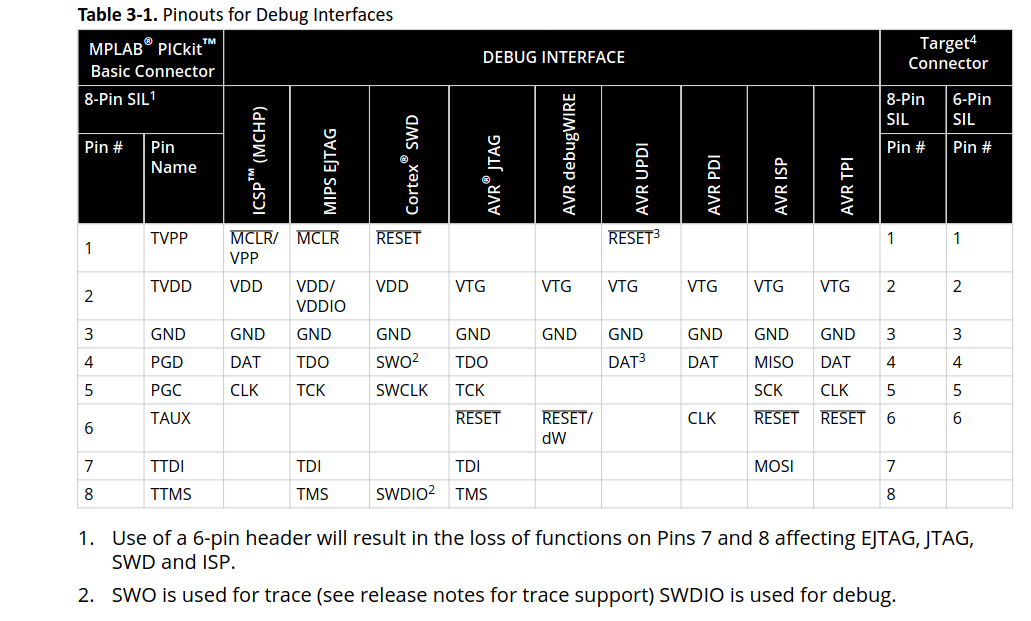
Developers working with target boards intended for the PICKit 3 are supported via the AC164110 adapter PCB. It takes an RJ cable and converts it into the six-pin header found in classic designs. This means that the PICKit Basic will also be able to program these legacy microcontrollers with no reconfiguration except for a change in the embedded software of the MCU programming tool.
Perfect Integration Into MPLAB
Microchip's embedded software development tools include the venerable MPLAB programming environment. The PICKit PG164110, of course, is a first-class citizen of this ecosystem. When connected to a workstation, it will provide a wide variety of interfacing options and can, furthermore, act as a debugger for all microcontrollers where debugging support is included in the silicon. This includes all recent Microchip releases. If a target device does not have an embedded debugger, a modified device connecting board can be used.
Finally, the programming device is equipped with light-emitting diodes, which provide a one-glance overview of the current status of the development tool and the board connected to it.
Flexible Power Supply Options
When using the PICKit Basic, power can be supplied from a laboratory bench-top power supply or from the regulator intended to be used in the final application. This flexibility is possible because Microchip removed the power supply feature to achieve a lower price for the finished device.
Conclusion
If a highly flexible programming device is needed for applications that can power themselves, the PG164110's low price and an incredibly wide array of supported microcontroller SKUs make it an excellent choice. In short, it is a device that should not be missing from a microcontroller laboratory.